Best AI for coding: what each tool actually costs and runs, checked in September 2026
Most "best AI coding tool" roundups list the same eight names and stop there, without saying which model any of them actually runs today or citing a single benchmark. Nearly all of them are also billing differently than they were three months ago. Here's what's confirmed, tool by tool, plus the one rename that's confusing search results for a whole product.
No single winner. It splits by job. Claude Code and Cursor's Composer-based agent mode both lead on hard, multi-file refactors in real user reports. GitHub Copilot wins on IDE breadth (VS Code, JetBrains, Visual Studio, Xcode) and price predictability for teams already paying for it. Gemini Code Assist currently has the most generous permanent free tier of any tool here.
Almost every tool switched to usage-based billing in 2026. GitHub Copilot (1 June 2026), OpenAI Codex (April 2026) and Qodo (July 2026) all moved off flat-rate or moved further toward metered credits this year. Read the billing section before you assume last year's price still applies.
"Windsurf" is now "Devin Desktop." Cognition acquired Windsurf in July 2025 and retired the brand on 2 June 2026, migrating existing users' settings automatically. If a comparison you're reading still treats Windsurf as a live, independent product, it's out of date.
Model choice matters more than tool choice for output quality. Copilot, Cursor and Cline all let you pick from Claude, GPT and Gemini's current model lineups inside the same interface. The tool is mostly an orchestration layer, and the model underneath often explains more of the quality difference than the tool brand does.
Pricing and models, as of today, not last year's screenshot
Every listicle ranking these tools right now is working from stale screenshots. Verified directly against each vendor's own pricing and docs pages this month:
Tool                Free tier                      Paid, from            Models available
-----------------------------------------------------------------------------------------------
GitHub Copilot      2,000 completions/50 chats/mo  Pro $10/mo (usage-    Claude Haiku 4.5-Opus 5,
                                                    based credits since   GPT-5-5.6, Gemini 3.5-3.8
                                                    1 Jun 2026)           Flash, Grok 4.5/4.6
Cursor              2,000 completions, 50 slow     Pro $20/mo            Composer 2.5 (own model),
                    premium requests                                     Claude Opus 4.7-5/Fable
                                                                          5.1, GPT-5-5.6, Gemini
                                                                          3-3.8 Flash/Pro, Grok 4.5/4.6
Claude Code         Not on Free plan                Pro $17-20/mo         Opus, Sonnet, Haiku,
                                                                          Fable (Fable capped at
                                                                          50% of weekly limit)
Devin Desktop       Was free pre-rename; check      Under devin.ai/       Was Claude Sonnet 4.6,
(formerly Windsurf) devin.ai/pricing directly       pricing               GPT-5.4, in-house SWE-1.5
OpenAI Codex/       Free, limited                   Go $8, Plus $20,      GPT-6 Astra rolling out
ChatGPT                                             Pro $100-200/mo       since 3 Sep 2026 (Plus/
                                                                          Pro/Business/Enterprise,
                                                                          no free tier yet)
Gemini Code Assist  180,000 completions/mo,          Standard $19-         Gemini 3 Flash ($0.30/M
/ Gemini CLI        240 chats/day (permanent         22.80/user/mo         in), Gemini 3 Pro
                    since March 2026)                                     ($1.25/M in)
Cline               Fully free, open-source,         ClinePass (new        Any provider via MCP:
                    bring-your-own-key               Jun 2026) $9.99/mo    Claude, Gemini, GPT,
                                                     bundled models        OpenRouter, DeepSeek
Qodo                Free Developer tier               Pro Team: credits    Bring-your-own-key on
                                                     ($0.012 each, since   Enterprise
                                                     Jul 2026)
Amazon Q Developer  50 agentic requests/mo,           Pro $19/user/mo      Amazon's own models;
                    1,000 lines Java transform        (4,000 lines/mo,     being sunset in favor
                    (new signups closed 15 May 2026)  then $0.003/line)    of Amazon Kiro
Tabnine             No free tier (dropped 2025),        Code Assistant $39,  Bring-your-own-key or
                    14-day trial, no card required      Agentic $59/user/mo  Tabnine's own models
The pattern across most of these rows is the same: flat monthly pricing is disappearing in favor of metered credits, and the free tier that used to be the safe default sometimes isn't the most generous option anymore. As of March 2026, Gemini Code Assist's free tier, 180,000 completions and 240 chats a day for individuals, is larger than what most of these tools charge for on their entry paid plan. Two rows are worth a second look before you commit budget: Amazon Q Developer closed new signups on 15 May 2026 as AWS shifts investment to its successor, Kiro, and Tabnine, unlike every other tool here, has no standing free tier at all since dropping it in 2025, only a 14-day trial that doesn't require a card.
What the benchmarks actually say, and how to read them
Benchmark numbers move fast enough here that any specific score is stale within weeks, but the ranking pattern is more durable. On SWE-bench Verified, the standard test of fixing real GitHub issues, the frontier models are effectively tied: Claude Opus 5 and GPT-5.6 Sol both land around 96-97%, with Claude Fable 5 close behind at 95%, per independent tracking from Artificial Analysis and morphllm.com. That's a saturated benchmark, within 4 points across the top five models, which tells you it no longer separates the tools well. OpenAI's newest model, GPT-6 Astra, launched 3 September 2026 and is already appearing on trackers, but it lands roughly at the same level as Fable 5.1, Opus 5 and Gemini's Flash-tier models on standard software-engineering benchmarks specifically, a tie rather than a takeover, per DataCamp's and ComputingForGeeks' independent testing.
SWE-bench Pro, a harder successor built specifically because Verified saturated, spreads the field out more: Claude Fable 5.1 currently leads at 81.2%, Opus 5 at 79.2%, with Qwen3.8-Max well behind at 67.7% (per codingfleet.com's September 2026 tracking). On [Terminal-Bench 2.1](https://artificialanalysis.ai/evaluations/terminalbench-v2-1), a test of real terminal/agentic task completion, Artificial Analysis's own leaderboard has Claude Fable 5.1 leading at 91.4% (max effort), with GPT-6 Astra close behind at 89.9% (high effort), a genuinely different ranking from SWE-bench Pro and a reminder that "best" depends entirely on which benchmark and which effort setting a vendor chooses to lead with.
One caution worth stating plainly: a widely cited independent test comparing Copilot (56.5%) against Cursor (51.7%) on 500 SWE-bench Verified tasks is real, but it's testing each product's specific agent scaffold and default settings on that day, not the underlying models in isolation. Swap either tool's model setting and the gap can move. Treat tool-vs-tool benchmark claims as a snapshot of a specific configuration, not a permanent verdict.
GitHub Copilot: the usage-billing backlash
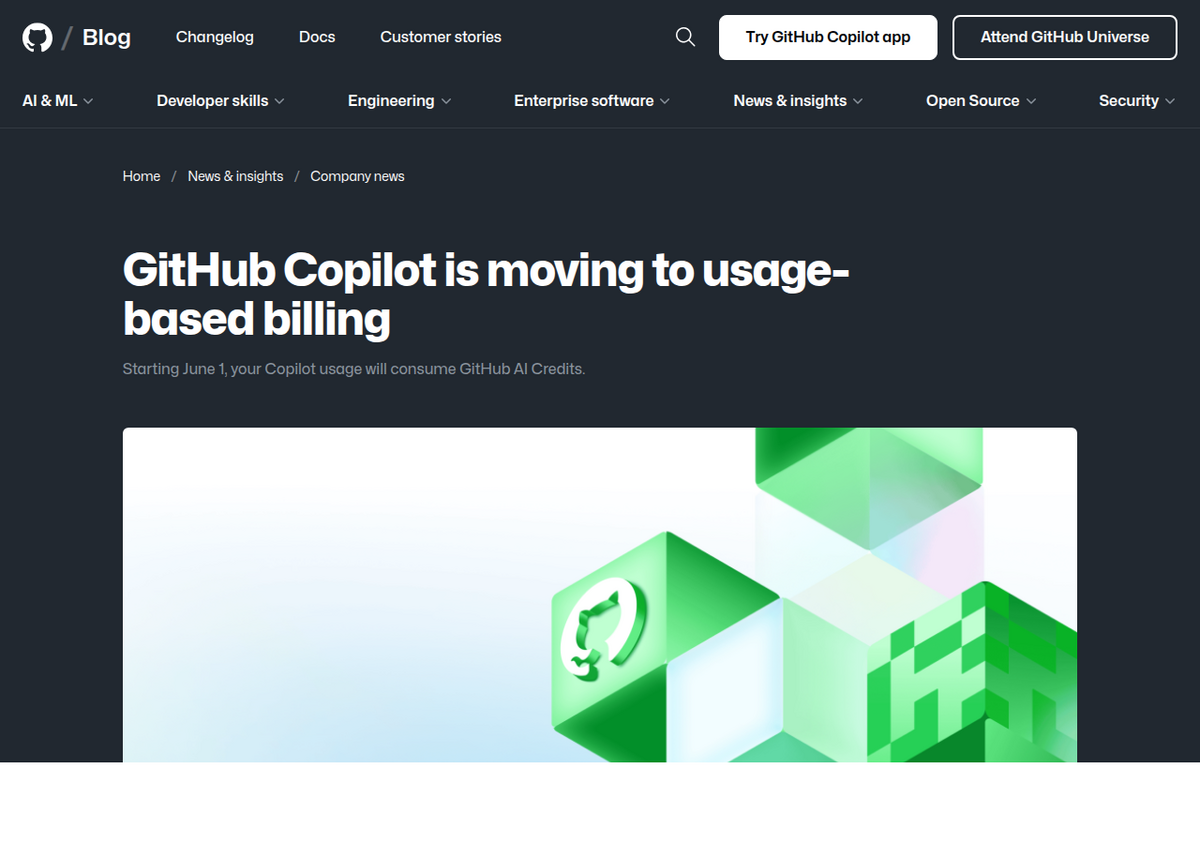
Copilot moved every paid tier to a usage-based premium request system on 1 June 2026, announced on GitHub's own blog: each plan includes a monthly allotment of AI Credits (1 credit = $0.01), and requests beyond it bill per-use rather than being simply unavailable. The backlash was immediate and specific. On Hacker News and in coverage from Visual Studio Magazine, one Pro+ subscriber reported burning 8% of a month's credit allotment in two hours of normal use; another described being billed roughly $6 for a single request with no way to see the cost coming beforehand. The core complaint wasn't the concept of usage billing, it was the lack of a pre-request cost estimate, the same opacity problem that hit Google's own Gemini app when it made a similar switch in May 2026.
None of that erases Copilot's real advantage: it's the only tool on this list with first-class support across VS Code, Visual Studio, JetBrains IDEs, Xcode, Eclipse, and its own CLI, all from one subscription. If your team is spread across IDEs, that breadth is hard to replicate by switching tools.
Cursor: the power-user default, with its own billing history
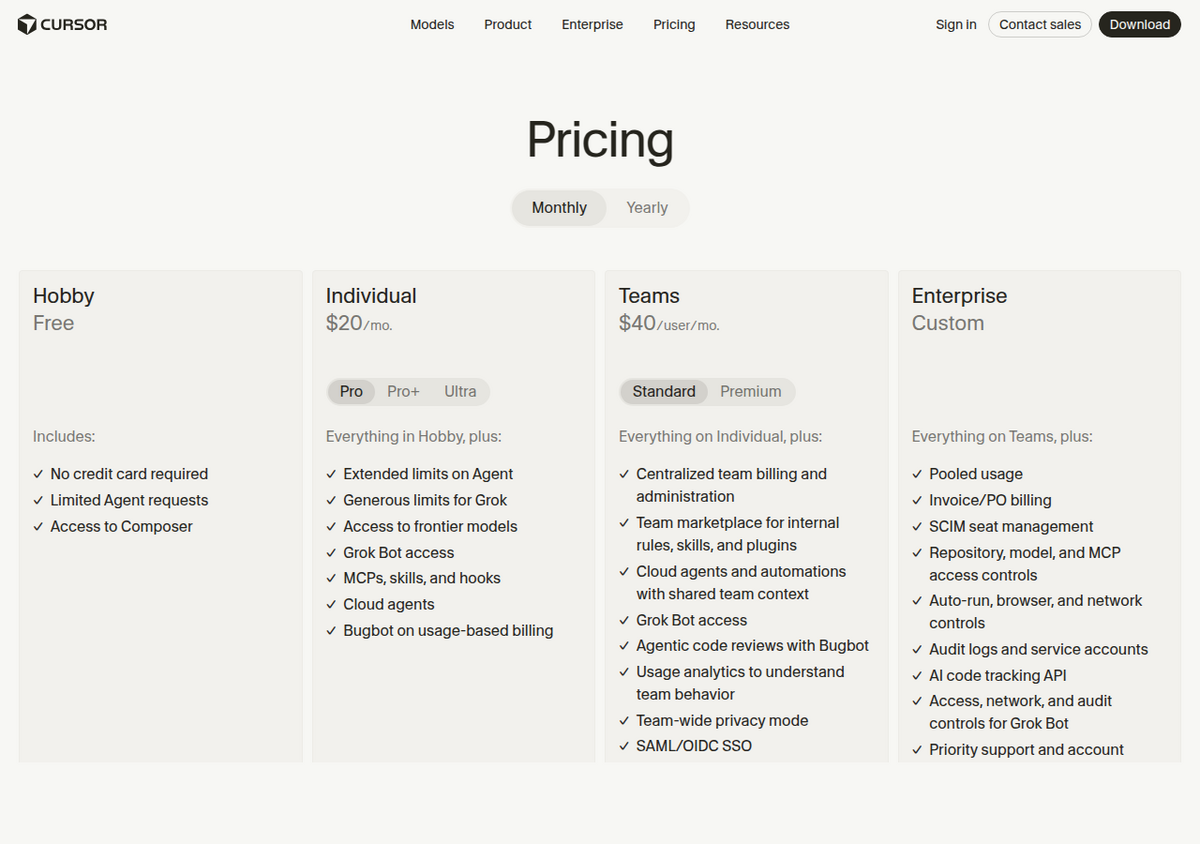
Cursor's pitch is model flexibility inside a purpose-built editor: its Individual plan (Pro, Pro+ or Ultra tiers, from $20/mo) gives access to Anthropic's, OpenAI's and Google's current flagship models plus its own in-house Composer, switchable per task. Real user complaints center on hitting "slow premium request" limits after roughly 50 heavy Composer sessions in a day, and a pricing history from 2025 (a since-apologized-for surprise-overage incident) that some users still cite as a reason for caution before committing to Pro+ or Ultra. For power users who want to choose their model per task rather than accept whatever a tool defaults to, Cursor remains the most flexible option here.
Claude Code: strong on hard problems, rocky on limits earlier this year
Anthropic's own coding agent isn't available on the Free plan at all, only Pro ($17-20/mo) and up. Community sentiment on r/ChatGPTCoding is consistent: Claude Code is the tool people reach for on broad refactors and ambiguous, multi-file problems, while OpenAI's Codex gets the nod for narrow, well-specified single-function tasks. That reputation took a hit in March 2026, when "Usage Limit" megathreads documented 5-hour session allowances burning out in as little as one to two hours of real use; Anthropic doubled the relevant limits on 6 May 2026 after the complaints, per contemporary coverage from MacRumors and The Register. Our own Claude Code limits coverage tracks the tier's more recent adjustments if you're deciding whether current limits fit your workflow.
What happened to Windsurf
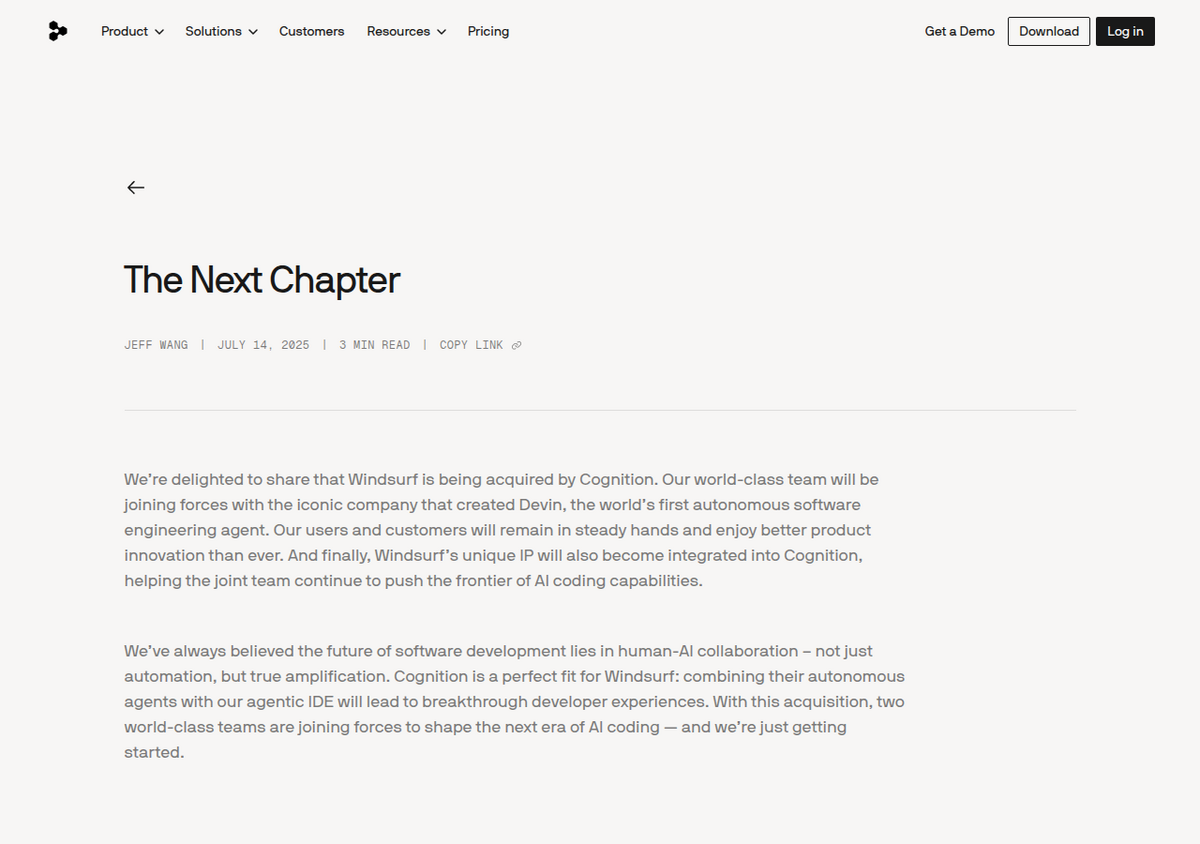
If you've read an older "best AI coding tool" list and it recommends Windsurf, it's describing a product that no longer exists under that name. Cognition, the company behind the autonomous coding agent Devin, announced its acquisition of Windsurf in July 2025, and formally retired the Windsurf brand on 2 June 2026, folding it into a unified product now called Devin Desktop. The rename happened with existing users' settings migrated automatically rather than through an opt-in prompt, which generated its own round of confused posts asking what happened to the app icon they were used to. Pricing that was previously listed under Windsurf (Free tier, $20 Pro, $200 Max, $40 Teams) is no longer the current source of truth; check devin.ai/pricing directly rather than any pre-June 2026 comparison, including some still-uncorrected listicles ranking today.
The free and near-free options worth knowing
- Gemini Code Assist / Gemini CLI currently has the most generous standing free tier of any tool here: 180,000 completions and 240 chats a day for individual accounts, permanent since March 2026, not a trial. One real caveat: Gemini CLI's free path via a personal Google login was discontinued on 18 June 2026, pushed toward either Google's separate Antigravity CLI or a paid API key. The IDE-integrated Gemini Code Assist extension itself is unaffected.
- Cline is fully free and open-source, a VS Code extension that orchestrates whatever model you bring your own API key for, including Claude, Gemini, GPT, or any OpenRouter-listed model. Its new ClinePass ($9.99/mo, launched June 2026) bundles a rotating set of open-weight models if you'd rather not manage separate API keys, but the core extension itself has no required subscription.
- Qodo kept a genuine free Developer tier through its own July 2026 pricing overhaul, which replaced its old flat $30/user/month Pro Team plan with credit-based billing ($0.012 per credit, sold in packs).
Which one for which job
If you're already paying for one IDE-agnostic subscription across a team, Copilot's breadth is hard to beat, budget for its usage-based overage rather than assuming a flat monthly number covers everything. If you want to pick your model per task and don't mind a dedicated editor, Cursor gives you the most flexibility. For genuinely hard, ambiguous, multi-file work, Claude Code's reputation is currently the strongest, and its post-May limits are more workable than they were in Q1 2026. If cost is the deciding factor and your usage is light-to-moderate, Gemini Code Assist's free tier and Cline's bring-your-own-key model both avoid a subscription entirely. None of these tools write correct code unsupervised on a hard problem; every source in this comparison, vendor and independent alike, still recommends reviewing generated diffs rather than merging on trust.
People also ask
Is Cursor better than GitHub Copilot?
Depends on the job. Cursor gives more model flexibility and is generally preferred by power users for agentic, multi-file work inside its own editor. Copilot wins on IDE breadth (VS Code, JetBrains, Visual Studio, Xcode from one subscription) and is the safer default if your team is already spread across multiple editors.
What's the best free AI coding tool?
Gemini Code Assist currently has the most generous permanent free tier (180,000 completions, 240 chats/day for individuals, since March 2026), ahead of GitHub Copilot's free tier (2,000 completions/50 chats a month) and Cursor's free tier. Cline is also fully free if you bring your own API key for whichever model you want to use.
What happened to Windsurf?
Cognition (maker of the Devin coding agent) acquired Windsurf in July 2025 and retired the brand on 2 June 2026, merging it into a single product called Devin Desktop. Existing users' settings migrated automatically. Any comparison still listing Windsurf as a separate live product is out of date.
Is Claude Code worth paying for?
It's consistently rated highest among these tools for hard, ambiguous, multi-file coding problems in community discussion, but it isn't available on Anthropic's Free plan at all. Its usage limits were a real complaint in Q1 2026 before Anthropic doubled the relevant caps on 6 May 2026; current limits are more workable than they were then.
Do these tools all use the same underlying AI models?
No, but several let you choose. Copilot, Cursor and Cline all support switching between current Claude, GPT and Gemini models inside the same interface. Others, like Claude Code, are tied to their own vendor's model family. The model you pick inside a flexible tool often explains more of the output-quality difference than the tool brand itself.
Ekspor NotebookLM Anda dalam satu klik
Ekstensi Chrome gratis. PDF, Word, dan Markdown. Dirender di perangkat Anda — tidak ada yang diunggah.